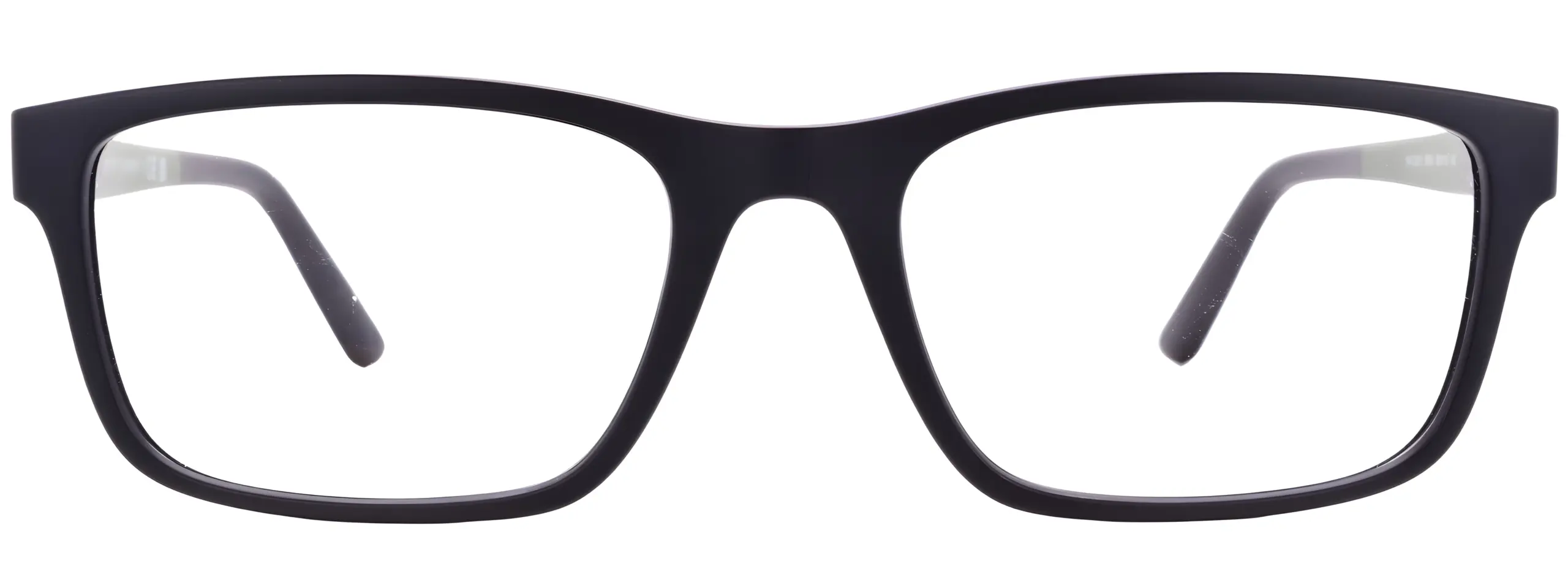
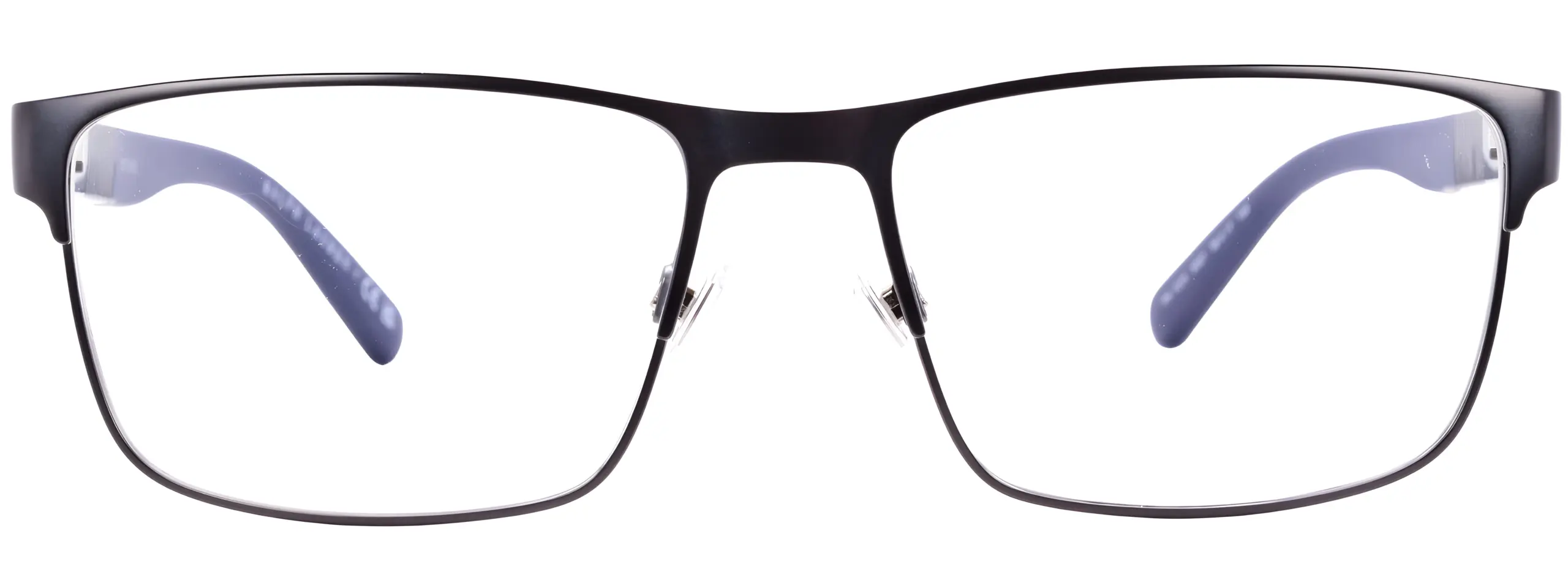
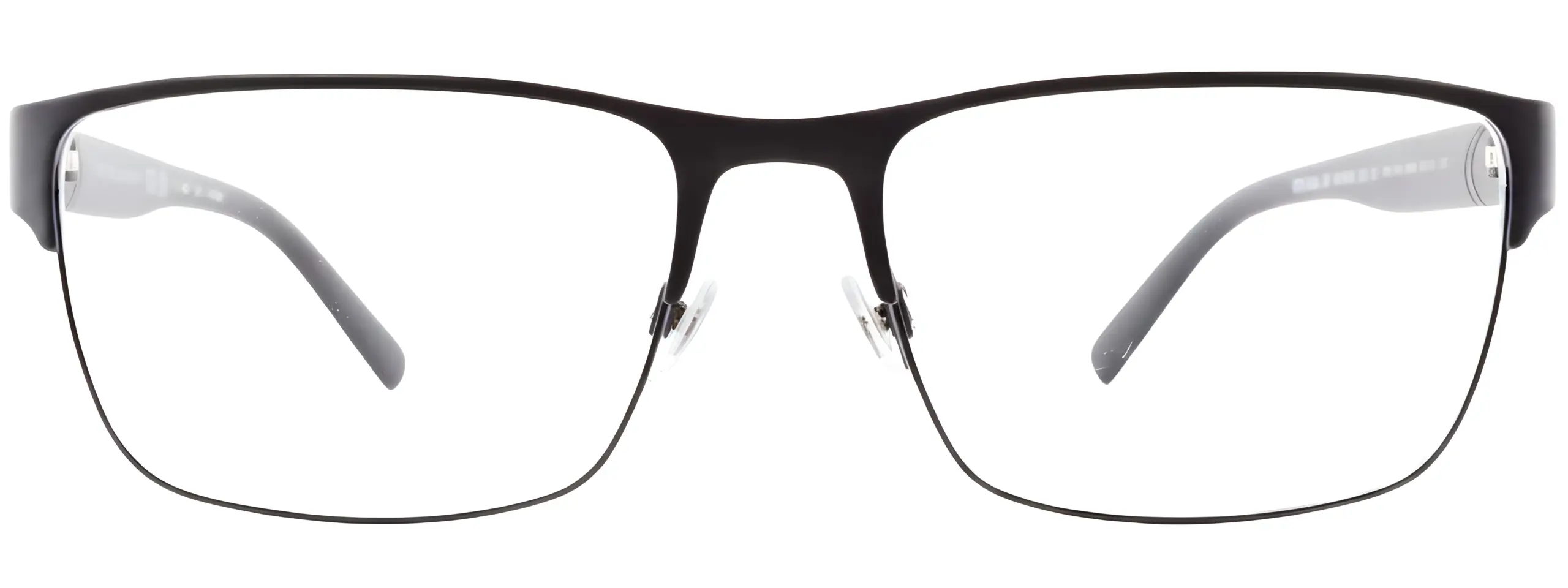
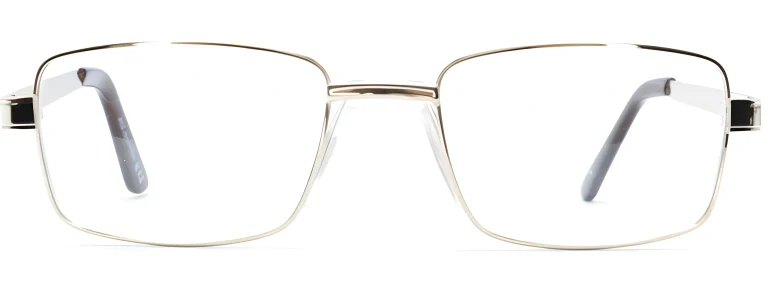
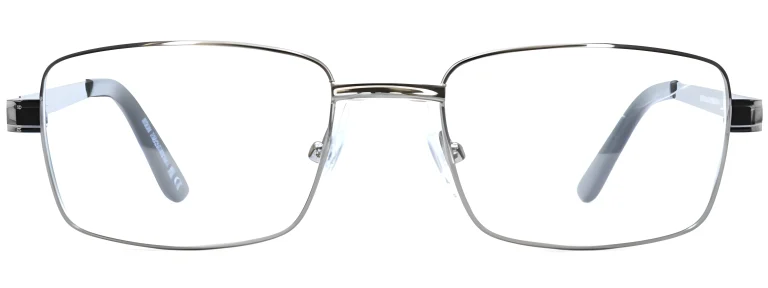
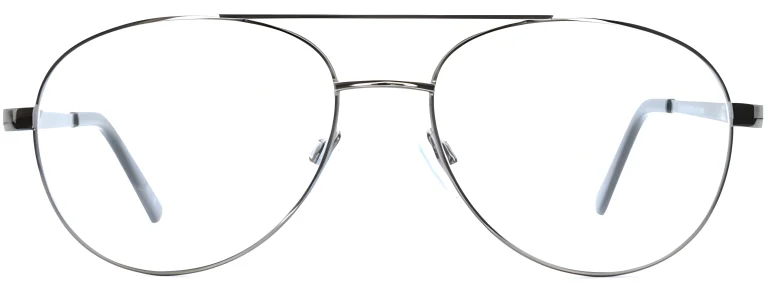
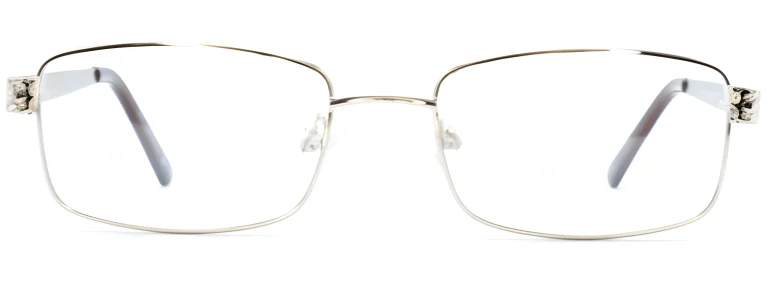
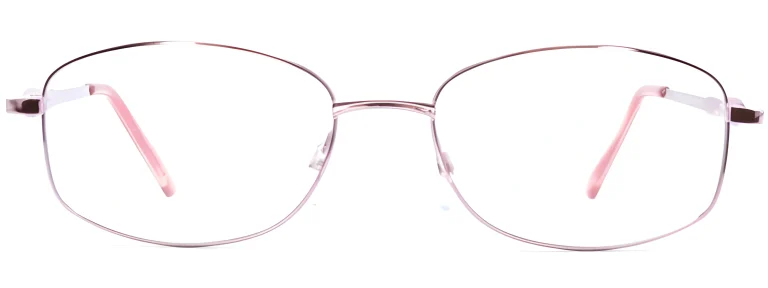
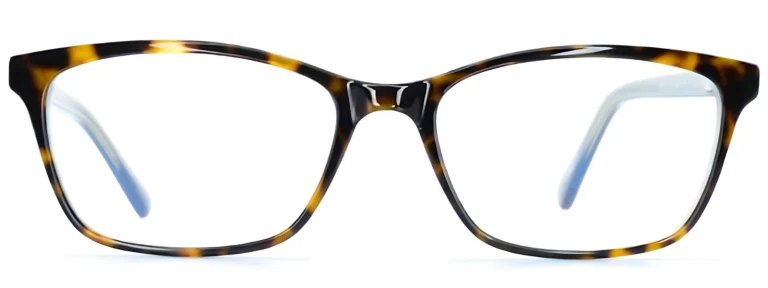
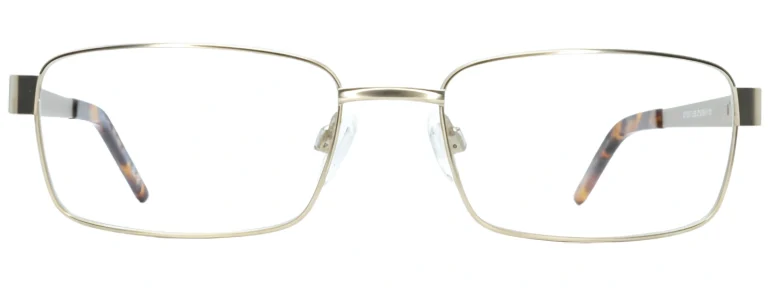
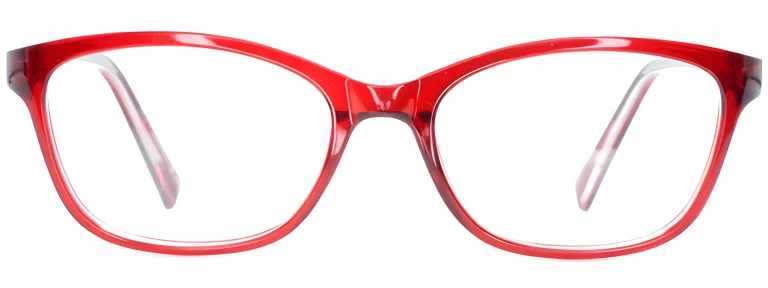



The quickest way to find your glasses size is to check a pair you already own and like. Most frames have their size printed on the inside of one arm. If the numbers have worn off, you can measure the frame with a ruler in a few minutes. Then use those numbers to find new frames that fit the same way.
For a full explanation of what each measurement means, see our glasses frame size guide.
Step 1: Pick the right pair to copy
Choose glasses that feel comfortable after a full day’s wear. They should sit level, stay in place without being pushed up your nose, and not press on your temples or behind your ears. If your current glasses don’t fit well, their numbers are still useful, but you’ll want to adjust them (see Step 4).
Step 2: Read the numbers on the arm
Look on the inside of either arm, near the hinge. If you can’t find the numbers there, check the inside of the bridge. You’re looking for three numbers, often written like this:
52 □ 18 140
| Number | Measurement | What it controls |
| 52 | Lens width (mm) | How wide the frame is on your face |
| 18 | Bridge width (mm) | How the frame sits on your nose |
| 140 | Arm length (mm) | How securely the frame sits behind your ears |
The square symbol, or sometimes a dash, just separates the lens and bridge sizes. The arm may also show a model number and a colour code, which don’t describe the size.
If the numbers are worn but you can read the model name, searching the model name online will often show its sizes.
Step 3: No numbers? Measure the frame yourself
You’ll need a ruler with millimetre markings and, ideally, a soft tape measure for the arm. Measure each part twice.
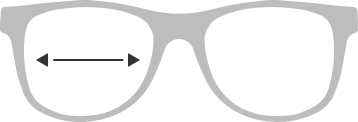
- Lens width. Measure one lens horizontally, straight across at its widest point, from edge to edge. On a full-rim frame, part of the lens sits hidden inside the rim, so your figure may come out about 1mm smaller than the manufacturer’s.
- Bridge width. Measure the narrowest gap between the two lenses, across the part that sits on your nose.
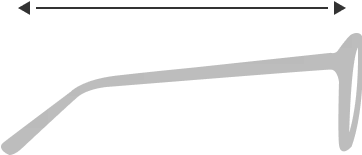
- Arm length. Lay a soft tape measure along the arm, starting at the hinge screw and following the curve to the tip.
- Total width (optional). Measure the whole front of the frame at its widest point, including the hinges. This is useful when a product page lists total frame width.
Hand measurements are approximate. Treat them as a starting point, not an exact match.
Step 4: Adjust the numbers if your current pair isn’t quite right
| If your current glasses… | Look for… |
| Slide down your nose | A bridge 1–2mm narrower, or a frame with adjustable nose pads |
| Pinch or leave marks on your nose | A bridge 1–2mm wider |
| Press on the sides of your head | A slightly wider lens width or total width |
| Look too wide for your face | A slightly narrower lens width |
| Feel tight behind your ears | Longer arms |
| Slip when you look down | Shorter arms, or ask an optician to adjust the bend |
Many fit problems can be fixed by adjusting the frame rather than changing size. Sliding and ear pressure in particular are often fixable in a few minutes by an optician.
Step 5: Match your size to new frames
- Open our shop page and use the lens width, bridge width and arm length filters.
- Set each filter to a small range around your numbers, such as your lens width ±2mm, bridge ±1mm, and arm length ±5mm. These ranges are a rule of thumb, not a guarantee of fit.
- Check the measurements on each product page before you order.
- Narrow your search by men’s, women’s or unisex frames if you like.
- Use our virtual try-on to check the shape and look on your face.
Why the same numbers can still fit differently
Size numbers get you close, but they don’t capture everything.
- Shape. A round frame and a rectangular frame with the same lens width cover different parts of your face.
- Lens height. The vertical depth of the lens is rarely printed. It matters for varifocals, which need a lens height of at least 30mm.
- Material. Acetate frames usually have a fixed bridge. Metal frames often have adjustable nose pads, which give more room for fine-tuning.
- Bridge style. A “keyhole” or low bridge sits differently from a straight bridge of the same width.
Getting help with a high prescription
If you have a high prescription, the frame size affects how thick your lenses will be as well as how the frame fits. A frame whose total lens-plus-bridge width is close to your PD usually gives thinner lenses. Our team can help you choose. Contact us with your current frame’s numbers and your prescription.
Frequently Asked Questions
Where is the size on my glasses?
On the inside of one arm, close to the hinge. On some frames it’s on the inside of the bridge.
What if my glasses have only two numbers?
The two numbers are usually the lens width and bridge width. The arm length is sometimes printed separately on the other arm. If it’s missing, measure it with a soft tape measure.
Can I order a size that’s different from my current glasses?
Yes. Small differences of 1–2mm are often hard to notice. Bigger changes affect the fit more, so change one measurement at a time where you can.
Do sunglasses sizes work the same way?
Yes. Sunglasses use the same measurements, though they are often made with wider lenses than optical frames. You can also turn any of our frames into prescription sunglasses with a sunglass tint or polarised lenses.