


Glasses by need
Reading Glasses
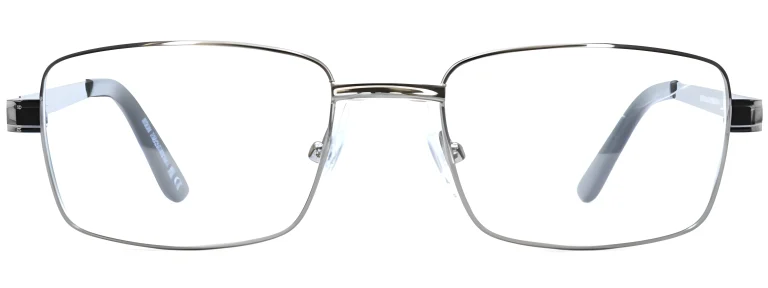
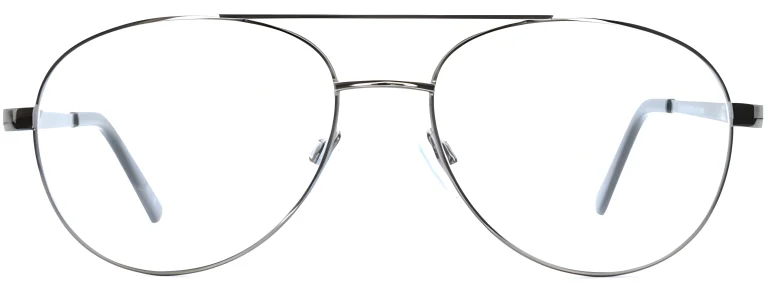
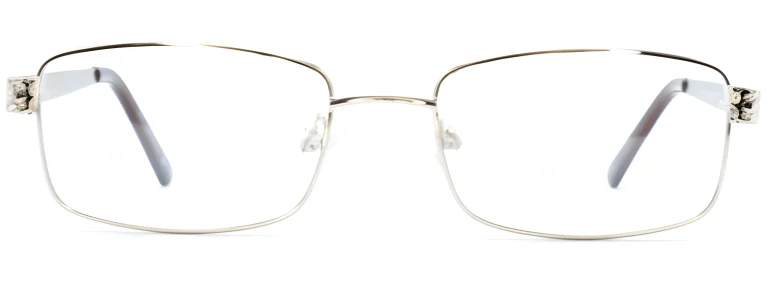
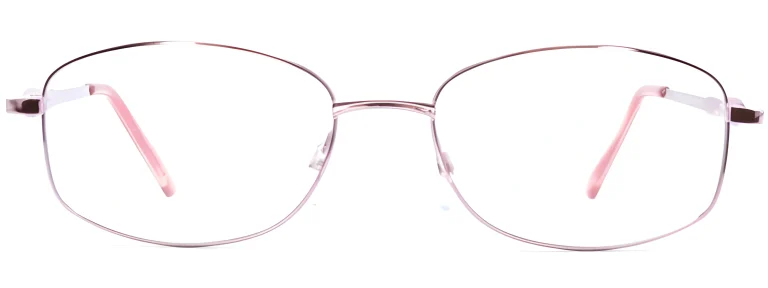
Prescription reading glasses glazed to your exact near vision prescription. Choose from single vision, bifocal or varifocal — in any frame from £10.
About reading glasses
Prescription reading glasses, made to order.
Prescription reading glasses correct near vision — for books, screens, menus and close-up tasks. Unlike over-the-counter readers, prescription reading glasses are made to your exact prescription, for your specific eyes.
Why choose prescription over off-the-shelf?
Off-the-shelf reading glasses have the same power in both lenses. Most people have different prescriptions for each eye — wearing the wrong power causes eye strain, headaches and discomfort over time. Prescription reading glasses are made to your exact specification, giving you accurate correction for each eye individually.
Do I need a separate pair for reading?
That depends on your prescription. If you also wear glasses for distance, you may benefit from bifocal or varifocal lenses — which correct both near and far in one pair. If reading is the only thing you need correction for, a single vision near prescription is the simplest and most cost-effective option.
How do I read my prescription?
Your reading prescription will show an ADD value — this is the additional power needed for near vision. If your prescription has an ADD value, it means you need help with reading specifically. A larger ADD value means you need more correction for close-up tasks. See the prescription guide below for more detail.
Choose your lens type
Which lens is right for reading?
Three lens types provide correction for near vision. Your lifestyle and whether you also need distance correction will determine which is the best fit.
Reading Only
Single vision
One prescription throughout the entire lens — optimised entirely for near vision. The simplest and most cost-effective reading lens.
✓
Corrects near vision only
✓
No adjustment period
✓
The widest reading zone of all three lens types
✓
Best for dedicated reading glasses you put on and take off
✓
Available in all four indexes
Near + distance
Bifocal
Two zones in one lens — the upper portion corrects distance, the lower corrects near. One pair for both tasks with a visible line between zones.
✓
Corrects near and distance in one pair
✓
Visible line separating near and distance zones
✓
No intermediate zone — not ideal for screens
✓
Generally easier to adjust to than varifocals
✓
Available in 1.50, 1.60 and 1.67 index
Near + intermediate + distance
Varifocal
Three zones in one lens — near, intermediate and far — with a seamless transition and no visible line. The most versatile option.
✓
Corrects near, intermediate and distance in one pair
✓
No visible line on the lens
✓
Includes an intermediate zone for screen use
✓
Requires an adjustment period of 1–2 weeks
✓
Available in all four indexes
Understanding your prescription
How to read a near vision prescription
Your optician will have given you a written prescription after your eye test. Here is what the key values mean for reading glasses.
SPH (Sphere)
The main lens power needed to correct your vision. A positive number means you are long-sighted (difficulty seeing close up). A negative number means you are short-sighted. For reading glasses, this is typically a positive value.
CYL (Cylinder)
Corrects astigmatism — an irregularity in the shape of the eye. Not everyone has a CYL value. If present, it must be included in your lens prescription for the best reading clarity.
AXIS
Only present if you have a CYL value. It specifies the orientation of the astigmatism correction in degrees (1–180). Required alongside CYL for accurate glazing.
ADD
The ADD value only appears on your prescription if your optometrist has also written a distance prescription. It represents the additional power needed on top of your distance correction to also see clearly at close range.
If your prescription includes an ADD value, it means you need correction at more than one distance — bifocal or varifocal lenses are likely the most suitable option, as they combine both corrections in one lens. The ADD value is used to create the near zone, while your distance values are used for the distance zone.
If your prescription has no ADD value and is written simply as a near prescription with positive sphere values, it is a standalone reading prescription. The SPH value on the prescription is your reading power directly — no calculation is needed. In this case, single vision reading lenses are the straightforward choice.
If your prescription includes an ADD value, it means you need correction at more than one distance — bifocal or varifocal lenses are likely the most suitable option, as they combine both corrections in one lens. The ADD value is used to create the near zone, while your distance values are used for the distance zone.
If your prescription has no ADD value and is written simply as a near prescription with positive sphere values, it is a standalone reading prescription. The SPH value on the prescription is your reading power directly — no calculation is needed. In this case, single vision reading lenses are the straightforward choice.
PD
Pupillary distance — the measurement in millimetres between the centres of your pupils. Essential for accurate lens positioning. Your optician can provide this, or you can measure it yourself using our virtual try-on tool.
Lens index
Choose your lens thickness
Reading lenses are available across all four indexes. A higher index means a thinner, lighter lens — most noticeable for stronger reading prescriptions.
How to order
How to order prescription reading glasses
1
Choose a frame
Browse our full range from £10. Any frame can be glazed with a reading prescription across all three lens types.
2
Select your lens type
Choose single vision for reading only, bifocal for near and distance, or varifocal for near, intermediate and distance.
3
Enter your prescription
Enter your SPH, CYL, AXIS, ADD and PD values from your prescription. Our team glazes every lens in-house to your exact specification.
Ready to order your reading glasses?
Prescription reading glasses from £10. All lenses glazed in-house by our qualified technicians. 90-day returns and 12-month warranty on designer frames.
FAQ
Frequently asked questions
What is the difference between prescription and off-the-shelf reading glasses?
Off-the-shelf reading glasses have the same power in both lenses and are available in fixed strengths. They are not tailored to your eyes. Prescription reading glasses are made to your exact prescription — correcting each eye individually, including any astigmatism or difference in power between eyes. They are more accurate, more comfortable for extended wear, and far less likely to cause eye strain or headaches.Should I get single vision or varifocal reading glasses?
If you only need correction for reading and are happy to take your glasses on and off, single vision reading glasses are the simplest and most cost-effective option. If you also need distance correction and want one pair for everything, varifocal lenses give you near, intermediate and distance in one lens. Bifocals offer near and distance without an intermediate zone and are generally easier to adjust to than varifocals.Do I need an up-to-date prescription to order?
We recommend using a prescription that is no more than two years old. Eye prescriptions can change over time and using an out-of-date prescription may result in lenses that no longer provide the best correction. If you are unsure, book an eye test with your optician before ordering.What does the ADD value on my prescription mean?
The ADD value only appears on your prescription if your optometrist has also written a distance prescription alongside it. It is the additional power needed on top of your distance correction to see clearly up close. If your prescription includes an ADD value, bifocal or varifocal lenses are usually the most appropriate choice — they combine your distance and near corrections in one lens.If your prescription has no ADD value and is written purely with positive sphere values, it is a standalone reading prescription. The SPH value is your reading power directly — single vision reading lenses are the right choice and no calculation is needed.
Can I use my reading glasses for computer screens?
Reading glasses are optimised for close-up distances — typically 30–40cm. Computer screens are usually positioned further away at around 50–70cm. While reading glasses may help with screens, they are not ideal. If you spend long periods at a computer, single vision computer lenses or varifocal lenses with an intermediate zone will give you better, more comfortable screen vision.