
If you have been told you are short-sighted, or if distant objects have started to look blurry while close-up tasks remain clear, you may have myopia. It is one of the most common eye conditions in the UK — and one of the most straightforward to manage with the right pair of glasses.
This guide explains what myopia actually is, what causes it, how it is diagnosed, and how glasses correct it — including what to look for on your prescription and which lens options suit different levels of short-sightedness.
What Is Myopia?
Myopia is the clinical term for short-sightedness. It is a refractive error — a condition in which the eye does not focus light correctly — rather than a disease of the eye itself.
According to Moorfields Eye Hospital, myopia occurs when the eyeball is too long from front to back, or when the cornea has too much curvature. Either way, the result is the same: light entering the eye focuses at a point in front of the retina rather than directly on it. This means distant objects appear blurred, while objects held close to the eye remain clear.
The Difference Between Normal Vision and Myopic Vision
According to Moorfields Eye Hospital, myopia affects up to one in three people in the UK. It typically begins between the ages of 6 and 13 and tends to progress through childhood and adolescence as the eye continues to grow, before stabilising in most people in their early-to-mid twenties.
Symptoms of Myopia
The most common sign is difficulty seeing objects clearly at a distance while close-up vision remains sharp. In practice, this might mean:
- Struggling to read road signs, a whiteboard, or a TV screen from across the room
- Squinting in order to bring distant objects into focus
- Headaches and eye strain, particularly after activities that require distance vision such as driving or watching sport
- Sitting closer to screens or moving nearer to objects to see them clearly
- In children: sitting at the front of the classroom, losing interest in sports, or rubbing their eyes frequently
Children and myopia. Because myopia often begins in childhood and children may not realise their distance vision is poor, the NHS recommends that all children have their eyes tested before starting school, and then at regular intervals throughout their school years. Many local authorities offer free school eye screening. If you are concerned about a child’s vision, an NHS-funded eye test at a registered optician is available free of charge for all children under 16.
What Causes Myopia?
Myopia does not have a single cause. Research from Moorfields Eye Hospital, Great Ormond Street Hospital, and Sight Research UK points to a combination of genetic and environmental factors.
Genetics
Research published by Ulster University and the College of Optometrists found that a child with one myopic parent is at least three times more likely to develop myopia. With two myopic parents, the likelihood rises to over seven times greater than a child with no myopic parents.
Prolonged Close-Up Work
Extended periods of reading, screen use, and other near-distance tasks are associated with the development and progression of myopia. Research from the University of Bristol found that, on average, each additional year spent in education is linked to greater myopia in the population.
Reduced Time Outdoors
Evidence funded by Sight Research UK suggests that reduced exposure to natural daylight is a contributing factor to myopia development. Children who spend more time outdoors appear to have a lower risk of becoming short-sighted, though the precise mechanism is still being studied.
A Growing Problem
Research from Great Ormond Street Hospital using UK Biobank data found that 20% of people born between 1939 and 1944 were myopic, compared to 29% of those born between 1965 and 1970 — a significant rise in a short time. Myopia is now more than twice as common in UK children as it was 50 years ago.
How Is Myopia Diagnosed?
Myopia is diagnosed during a standard eye test. Your optometrist will assess how well you can see a chart of letters at a distance, and then use a technique called refraction to determine the lens power needed to correct your vision. This involves looking through different lenses to find the combination that gives the clearest result.
The result is recorded as a prescription. If you are short-sighted, the sphere (SPH) value on your prescription will have a minus (–) sign in front of it. The higher the minus number, the greater the degree of myopia. For example, –1.00 indicates mild short-sightedness, while –6.00 or above is considered high myopia.
Understanding Your Myopia Prescription
–0.25 to –3.00
Low Myopia
Mild short-sightedness. Standard 1.50 index lenses are suitable for most prescriptions in this range.
–3.00 to –6.00
Moderate Myopia
A thinner lens index (1.60 or 1.67) is usually recommended to reduce edge thickness and weight.
–6.00 and above
High Myopia
A 1.74 ultra-thin lens index is typically recommended. Regular eye health checks are particularly important.
Can Glasses Correct Myopia?
Yes — glasses are the most common and straightforward way to correct myopia. A single vision distance lens works by bending light before it enters the eye, shifting the focal point from in front of the retina to directly on it. The result is clear distance vision.
Myopia lenses are concave — thinner in the centre and thicker at the edges. This is the opposite of reading glasses, which are convex. The practical implication is that the higher your minus prescription, the thicker the edges of your lenses will be at a standard index — which is why choosing the right lens index matters for comfort, appearance, and weight.
It is important to understand that glasses correct the effect of myopia — they do not reverse or cure it. When you remove your glasses, your vision returns to how it was. For most people, this is a perfectly acceptable long-term solution, and their prescription stabilises in their mid-twenties.
Choosing the Right Lens Index for Myopia
The lens index refers to how efficiently a lens bends light. A higher index lens can achieve the same correction as a lower index lens but in a thinner, lighter piece of material. For myopia, this matters more than it does for low plus prescriptions, because minus lenses get thicker at the edges — and a high minus in a standard lens can feel heavy and look thick in the frame.
Standard — suitable for prescriptions up to around ±2.00
The most affordable option and ideal for lower prescriptions. Comes with anti-scratch coating as standard at Glasses Store. For mild myopia, a 1.50 lens is a practical, cost-effective choice.
Thin — recommended for prescriptions between ±2.00 and ±4.00
A meaningful step up in thinness and lightness. Includes MAR (anti-reflective) coating as standard. A good choice for moderate myopia where the 1.50 lens would produce noticeable edge thickness.
Thinner — recommended for prescriptions between ±4.00 and ±6.00
Noticeably thinner and lighter than 1.60. Includes MAR coating as standard. The recommended choice for stronger myopia prescriptions where appearance and comfort are a priority.
Ultra-thin — recommended for prescriptions of ±6.00 and above
The thinnest lens available at Glasses Store. Includes MAR coating as standard. For high myopia, a 1.74 lens makes a significant practical difference — lenses that would otherwise be very thick and heavy become slim and wearable in almost any frame.
Does Myopia Get Worse Over Time?
In most people, myopia begins in childhood or adolescence and progresses gradually as the eye grows. According to Moorfields Eye Hospital, it typically stabilises in the early-to-mid twenties once the eye has stopped growing. After that, most adults with myopia can expect their prescription to remain largely stable, although some people do experience small changes in their thirties or forties.
The rate of progression in childhood varies. Children who develop myopia at a younger age are more likely to reach a higher final prescription than those who first become myopic in their teens. This is why regular eye tests throughout childhood are particularly valuable — an up-to-date prescription ensures the eyes are not working harder than they need to, and an optometrist can monitor how quickly the prescription is changing.
High Myopia: What Are the Risks?
For most people with mild or moderate myopia, glasses provide full correction and no further health concerns arise. High myopia — generally defined as a prescription of –6.00 or above — is a different matter. Because high myopia involves significant elongation of the eyeball, the structures inside the eye can be stretched and placed under additional strain.
According to published research supported by Moorfields Biomedical Research Centre, the complications associated with high myopia include:
- →Retinal detachment. The retina is stretched thin in highly myopic eyes, making it more vulnerable to tearing and detachment. People with myopia carry a higher risk of retinal detachment than those without. Symptoms including sudden floaters, flashes of light, or a shadow across vision require urgent same-day eye assessment.
- →Glaucoma. Myopic eyes are more susceptible to raised pressure that can damage the optic nerve. Regular eye health checks that include optic nerve assessment are important for people with high myopia.
- →Myopic maculopathy. Degeneration of the central area of the retina (the macula) can occur in high myopia, affecting central vision. This is more likely the higher the prescription and the older the patient.
- →Earlier cataracts. Research indicates that highly myopic eyes are more prone to developing cataracts earlier in life than those without myopia.
If you have high myopia, the NHS recommends annual eye tests rather than the standard two-yearly interval. This allows your optometrist to monitor both your prescription and the health of your retina, and to refer you promptly if any changes require further investigation.
Choosing Frames for Myopia
For people with significant minus prescriptions, frame choice has a practical impact on how your lenses look and feel. Minus lenses are thickest at the edges, so the frame itself plays a role in how much of that edge is visible.
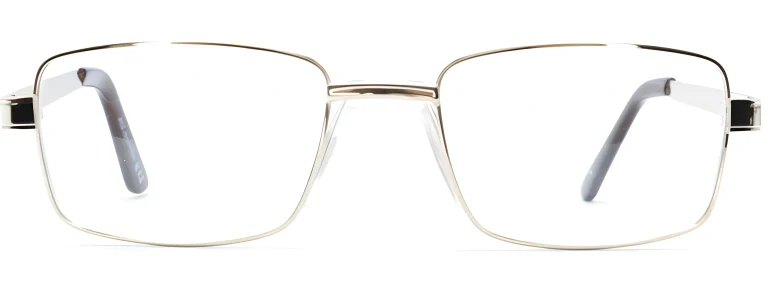
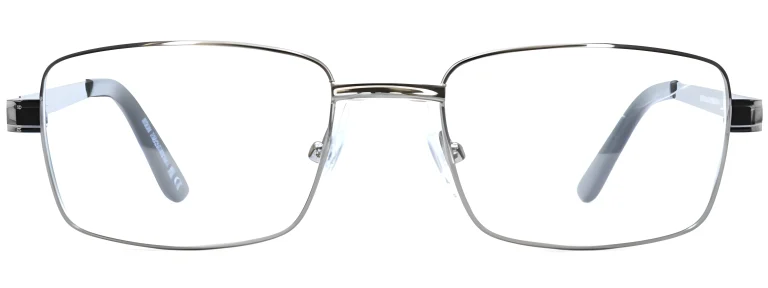
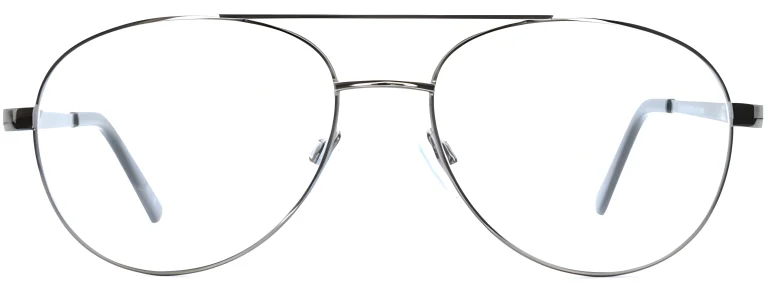
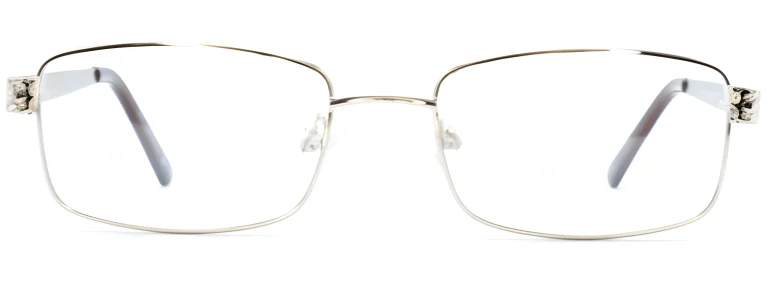
Smaller, rounder frames generally suit higher minus prescriptions better — a smaller lens diameter means the edge of the lens is closer to the optical centre, so less material is needed and the edge is thinner. Wide, rectangular frames with a large lens area tend to make stronger prescriptions look and feel bulkier. If you have a higher prescription and want the slimmest possible result, pairing a 1.67 or 1.74 lens with a smaller frame makes a noticeable difference.
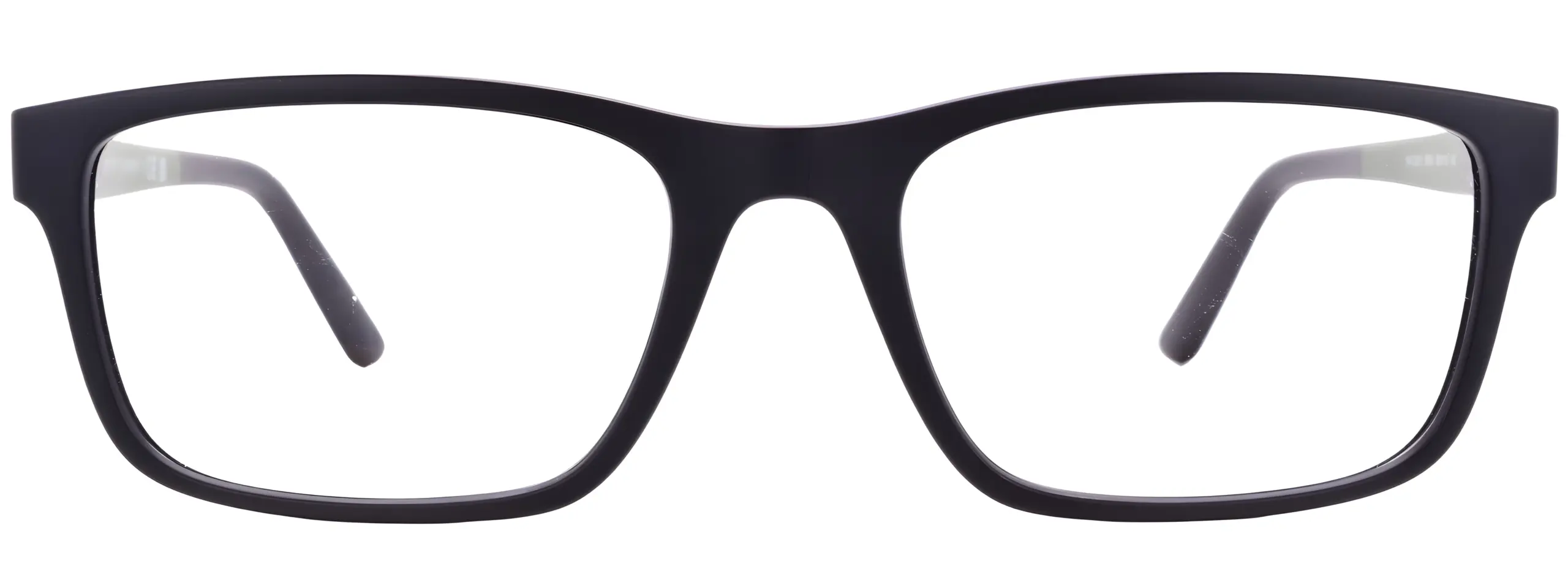
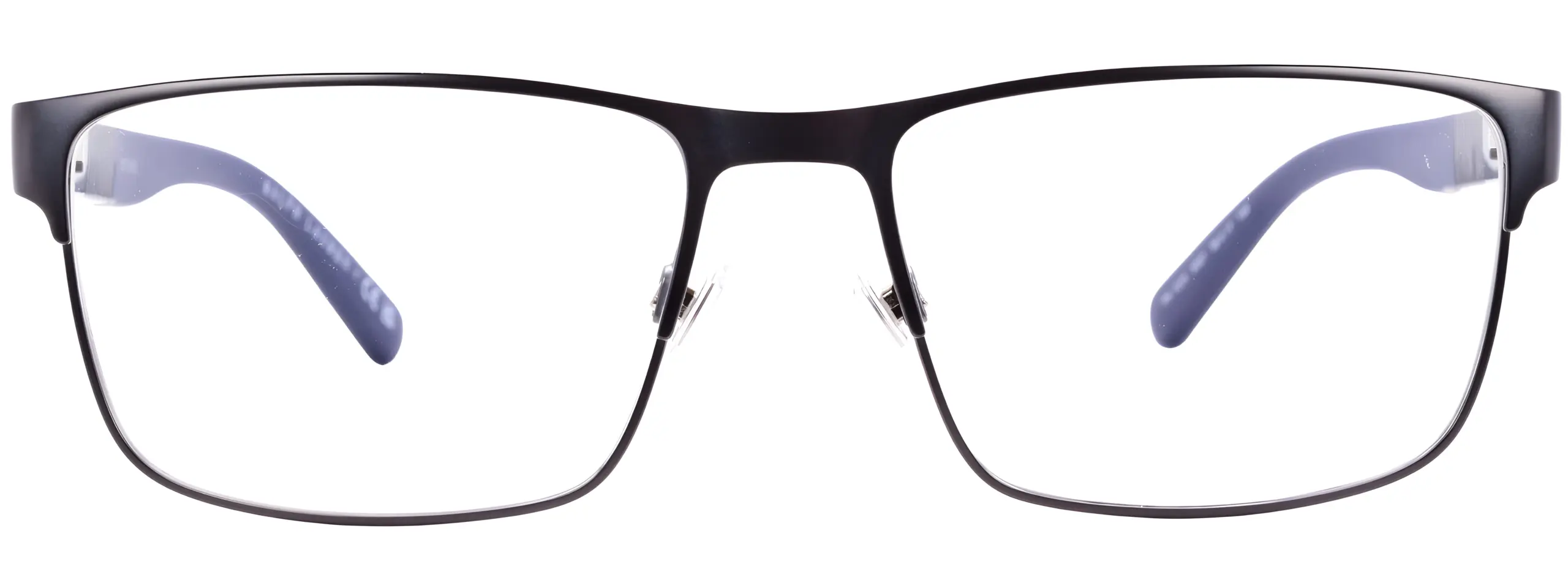
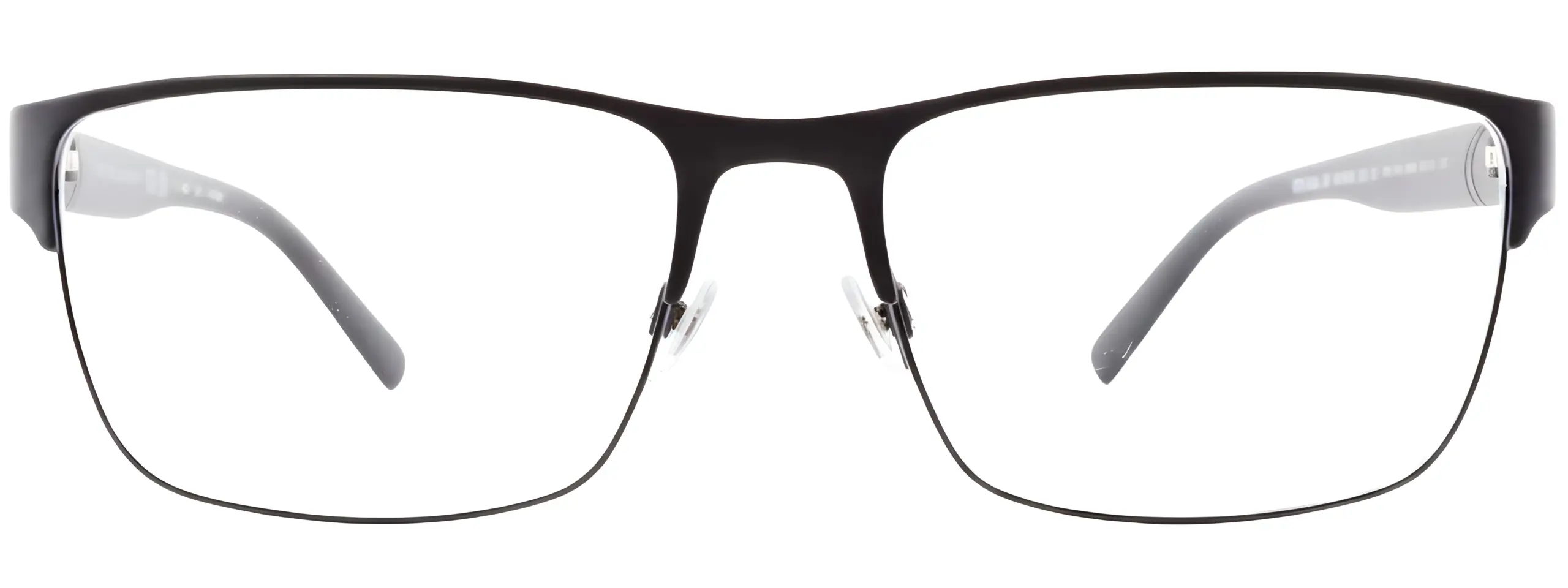
Browse our full range of men’s glasses and women’s glasses, all compatible with every lens index we offer.
Frequently Asked Questions
Will wearing glasses make my myopia worse?
No. Wearing correctly prescribed glasses does not cause myopia to worsen. This is a common misconception. Myopia progresses because the eye continues to grow — a process that happens regardless of whether glasses are worn. Wearing an accurate prescription actually reduces eye strain and allows the visual system to function comfortably.
Do I need to wear my glasses all the time?
This depends on the degree of your myopia. With mild short-sightedness, you may only need glasses for specific tasks — driving, watching TV, or viewing a presentation. With moderate or high myopia, most people find it more comfortable and practical to wear their glasses all the time. Your optometrist will advise you based on your prescription and lifestyle.
Can myopia be cured?
Glasses and contact lenses correct myopia but do not cure it — your distance vision returns to how it was when you remove them. Laser eye surgery (such as LASIK or LASEK) can permanently reshape the cornea to correct myopia in eligible adults, but this is a surgical procedure and not suitable for everyone. Your optometrist or ophthalmologist can advise whether you might be a candidate.
At what age does myopia stop getting worse?
According to Moorfields Eye Hospital, myopia typically begins between the ages of 6 and 13 and progresses through childhood and adolescence. For most people it stabilises in the early-to-mid twenties once the eye has finished growing. Some adults experience small changes in their thirties or forties, but significant progression after the mid-twenties is less common.
How often should I have an eye test if I have myopia?
For most adults with stable myopia, the NHS recommends an eye test every two years. Children with myopia should be tested more frequently — typically every year — to monitor progression and ensure their prescription is kept up to date. Adults with high myopia (–6.00 or above) are generally advised to have annual eye tests due to the increased risk of retinal and other ocular complications.
What lens index do I need for myopia?
This depends on your prescription strength. As a general guide: 1.50 suits prescriptions up to around ±2.00; 1.60 suits ±2.00 to ±4.00; 1.67 suits ±4.00 to ±6.00; and 1.74 is recommended for ±6.00 and above. Higher index lenses produce thinner, lighter glasses for stronger prescriptions. Your optometrist will advise the most appropriate option for your specific prescription and frame choice.
Is myopia hereditary?
Genetics play a significant role. Research from Ulster University found that a child with one myopic parent is at least three times more likely to develop myopia than a child with no myopic parents, rising to over seven times more likely if both parents are short-sighted. However, genetics alone do not determine outcome — environmental factors, particularly time spent on near tasks and time spent outdoors, also influence whether and how quickly myopia develops.
Summary
Myopia is a very common, well-understood condition affecting around one in three people in the UK. It occurs when the eye is too long or the cornea too curved, causing light to focus in front of the retina and distant objects to appear blurred. It typically begins in childhood, progresses through adolescence, and stabilises in the mid-twenties for most people.
Glasses correct myopia effectively and immediately. Choosing the right lens index for your prescription strength makes your glasses more comfortable, lighter, and better looking — particularly for moderate or high myopia where a standard lens would be thick at the edges. At Glasses Store, we offer all four lens indexes — 1.50, 1.60, 1.67 and 1.74 — across our full range of frames, with next-day delivery available on standard 1.50 single vision orders placed before 3pm.
If you have high myopia, regular eye health checks are particularly important, and your optometrist can monitor for any changes to retinal health that require further attention.