







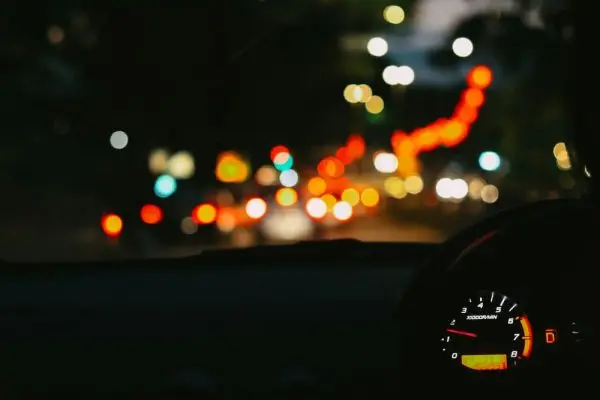
Driving at night can feel uncomfortable with the wrong glasses. Headlights glare, road signs blur, and your eyes tire faster. This isn’t always down to your eyesight getting worse. In many cases, it’s about how your glasses interact with low light and artificial lighting. This guide explains what actually helps when choosing glasses for night driving, without hype or gimmicks.
Why night driving feels harder with glasses
Low light forces your eyes to work harder. Pupils widen, contrast drops, and glare becomes more noticeable. Oncoming headlights, street lamps, and reflective signs all add to the strain. If your glasses aren’t suited to these conditions, the problems become more obvious. Common issues include halos around lights, reflections on the lenses, and reduced clarity when shifting focus between near and far distances. Even a small mismatch between your prescription and your driving needs can make night driving feel uncomfortable.
Clear vision matters more at night
At night, there’s less margin for error. Small visual distortions that go unnoticed during the day become more distracting in the dark. This is why clarity and consistency across the lens surface are more important than bold styling or oversized frames. If your glasses are slightly off in fit or prescription, night driving is usually where you notice it first.
How glare affects night driving
Glare is one of the biggest complaints when driving in the dark. It comes from strong light sources hitting the lens surface and bouncing back into your eyes. This can reduce contrast and make it harder to judge distances. Reducing glare isn’t about dark lenses. It’s about managing reflections and keeping the lens surface as clear as possible so your eyes don’t have to fight unnecessary visual noise.
UK law on tinted glasses for night driving
In the UK, drivers are expected to have clear, unobstructed vision at night. The Highway Code advises that tinted glasses should not be worn in low-light or night-time conditions if they restrict vision. While there is no specific law that bans tinted prescription glasses outright, the legal requirement is that your vision must not be impaired at any time while driving.
In practical terms, lenses worn at night should allow at least 75% of visible light to pass through. Anything darker than this is considered unsuitable for night driving. Most sunglasses, coloured tints, and so-called “night driving” yellow lenses do not meet this requirement and should not be used after dark. If tinted glasses reduce your ability to see clearly at night and you are stopped by police or involved in an incident, this can be treated in the same way as driving without adequate vision.
Photochromic lenses are acceptable only if they return to a clear state at night. Any lens that remains noticeably tinted after dusk should be avoided for night driving.
Frame fit and stability while driving
A secure fit matters more than people realise. Glasses that slip, sit too low, or move when you turn your head can interrupt your focus. When driving at night, even small adjustments can break concentration. Frames that sit properly on the nose and remain stable during head movement help maintain consistent vision. Comfort also plays a role. If frames press too hard or feel unbalanced, fatigue sets in faster.
Are tinted lenses a good idea for night driving?
Tinted lenses are often marketed as a solution for night driving, but they are not usually helpful. Dark or coloured tints reduce the amount of light reaching your eyes, which can make visibility worse in low-light conditions. For night driving, clarity and light transmission matter more than tint. Any lens choice that reduces brightness should be approached with caution.
Keeping your lenses clean and clear
Smudges, scratches, and dust are far more noticeable at night. Light scatters across marks on the lens surface, increasing glare and blur. Even a small smear can create distracting streaks from headlights. Keeping lenses clean and replacing heavily worn lenses can make a noticeable difference to night-time comfort.
When it might be time to update your glasses
If night driving has become increasingly uncomfortable, it may be a sign that your current glasses are no longer doing the job properly. Prescriptions can change gradually, and lenses can wear over time. If you notice increased glare, difficulty focusing, or eye strain when driving in the dark, reviewing your glasses setup can help improve comfort and confidence on the road.
Final thoughts
Night driving puts more demand on your vision than daytime driving. Glasses that work well during the day may not always perform the same after dark. Focusing on clarity, fit, and legal light transmission helps make night driving feel more comfortable and controlled.
FAQ – Glasses for Night Driving
Are tinted glasses legal for night driving in the UK?
There is no specific law banning tinted prescription glasses, but UK guidance states your vision must not be impaired at night. Tinted lenses that restrict visibility should not be worn after dark.
How much light must lenses let through for night driving?
As a general safety standard, lenses worn at night should allow at least 75% of visible light to pass through. Anything darker is considered unsuitable for night driving.
Can I wear sunglasses or coloured lenses at night?
No. Sunglasses and coloured tints, including yellow lenses marketed for night driving, reduce light transmission and should not be worn after dusk.
Are photochromic lenses allowed for night driving?
Yes, but only if they return to a clear state at night. If the lenses remain noticeably tinted, they should not be used for night driving.
What happens if tinted glasses affect my vision while driving?
If your vision is impaired and you are stopped by police or involved in an incident, it can be treated the same as driving without adequate eyesight correction.
What helps with glare if tints aren’t suitable?
Keeping lenses clean and reducing reflections through lens coatings is safer than using tinted lenses for night driving.